An Analog Workbench
I use digital tools for almost everything, but some ideas need paper before they need structure. This is how I plan to turn a Traveler’s Notebook into a practical analog workbench.
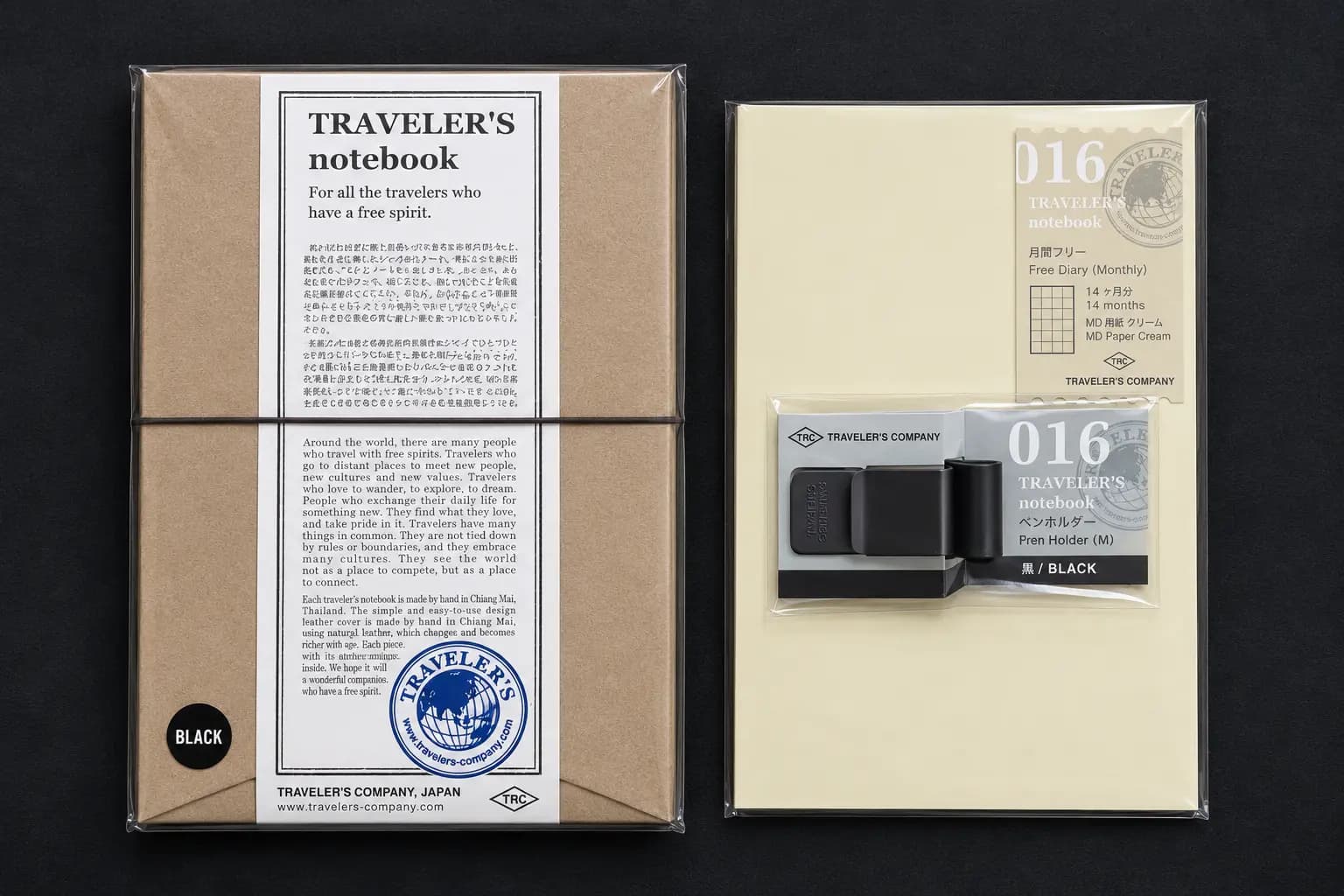
Most of my projects live in digital systems.
I use Notion for structured knowledge, Workbench for documenting projects, Pro Tools for music, and various applications for writing, design, development and planning. Digital tools are powerful, searchable and easy to reorganize. But they can also create distance between an idea and the act of thinking about it.
Sometimes I do not need another database, dashboard or perfectly structured page. I need somewhere to write down an unfinished thought before it disappears.
That is why I bought a Traveler’s Notebook Regular.
A physical counterweight
There is something different about working on paper.
I experience the same thing when drawing with graphite or charcoal, practicing tattooing, playing guitar or working on a physical model. The resistance of the material slows the process down just enough to make me pay attention.
Writing by hand does something similar.
A blank page does not suggest a template, create a notification or offer another menu. It simply gives the thought somewhere to exist.
I do not want the notebook to replace my digital tools. Instead, I want it to become the physical beginning of the process: the place where ideas are captured, questions are explored and rough thoughts are allowed to remain rough.
Why a Traveler’s Notebook?
The appeal is its simplicity.
A leather cover holds a collection of replaceable inserts. Each insert can have a different purpose, and the configuration can change over time. It feels more like a personal working object than a conventional planner.
I chose the black Regular version together with a monthly diary and a black pen holder. The Regular format gives me enough room to think while remaining narrow and portable.
The leather will collect scratches, marks and wear as I use it. That is part of the attraction. I do not want it to remain pristine. I want it to gradually become a record of where it has been and what I have worked on.
My initial setup
I am deliberately starting with a small system. I have a habit of building systems around my projects, so the challenge here is to avoid designing the notebook more than I use it.
The first configuration will have three main functions.
Calendar
The monthly calendar will be the control layer.
It will contain actual dates: appointments, deadlines, planned creative sessions, releases and other commitments tied to a specific day.
I do not intend to fill every square with general tasks. Those belong elsewhere. The calendar should make the shape of the month visible without becoming another crowded task manager.
Capture
The second section will be an open inbox.
This is where I can quickly record ideas for music, artwork, websites, articles, applications and other projects. It can also hold observations, questions, reminders and small decisions.
The notes do not need to be complete or organised. Their purpose is simply to prevent useful thoughts from being lost.
Anything worth developing can later be moved into Workbench, Notion or the relevant project.
Letting it become imperfect
There is an entire world of elaborate planner layouts, decorations and carefully designed notebook pages. Some of them look incredible, but that is not what I need from this notebook.
I want handwritten headings, rough diagrams, crossed-out sentences, small sketches, pasted photographs and notes written at different times in different places.
I want it to look used.
The real test is not whether the initial setup is perfect. It is whether I reach for the notebook when an idea appears, when I am trying to understand something or when I need to step away from the screen.
This is only the starting configuration. I expect some sections to work, others to change and new inserts to appear as the notebook develops.
That evolution is part of the project—and I intend to document it.
Continue Reading
Workbench is a local-first project journal I built to give creative work more structure—without turning it into another complicated productivity system.
Writing about music, visual practice, technology, learning and the systems behind the projects.